
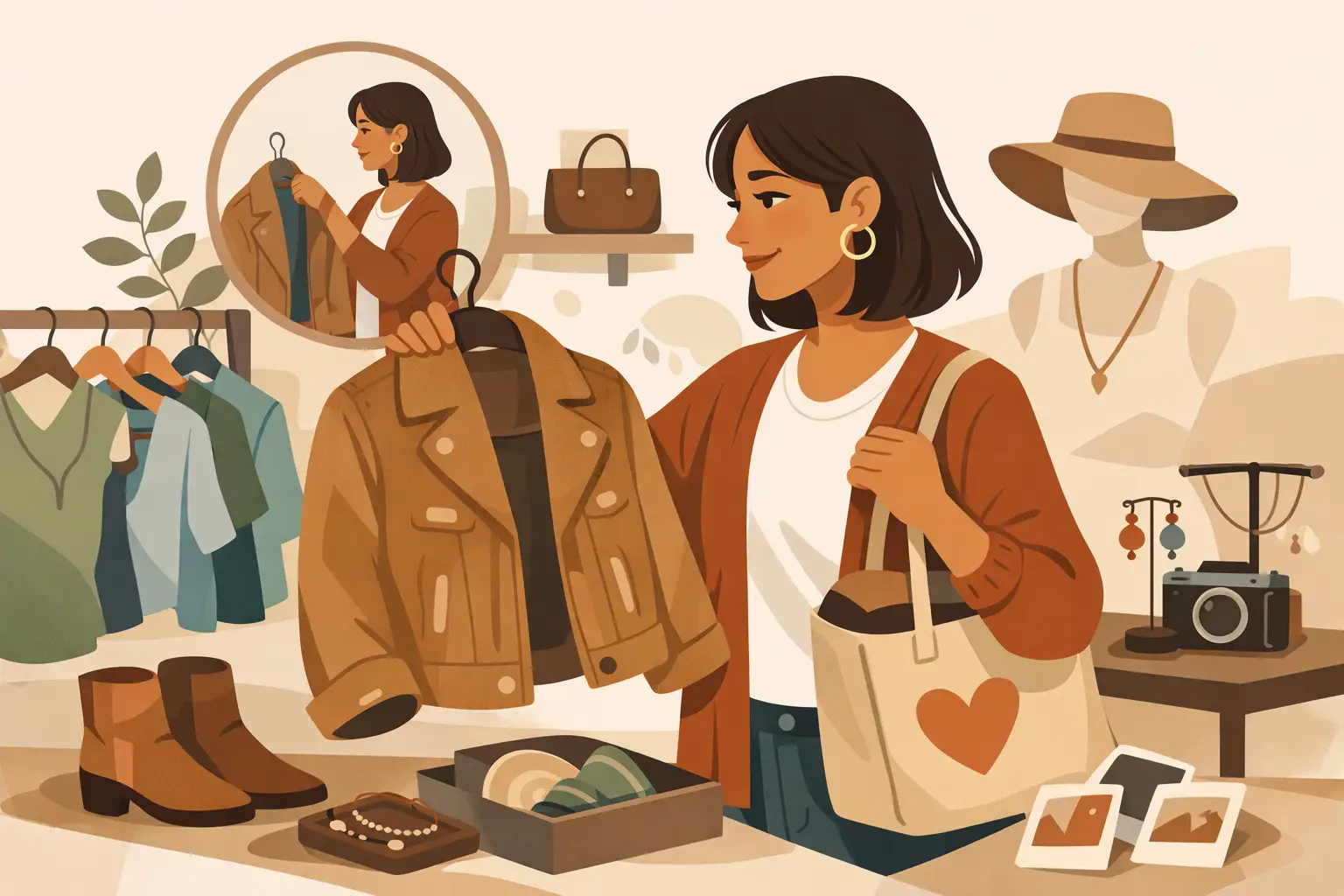
That perfect vintage denim jacket you find for less than a takeout order? That is the magic of thrifted fashion. It does not just give you something cute to wear. It gives you a story, a little adrenaline rush, and the feeling that your closet looks like you instead of a store mannequin.
For a lot of us, getting dressed is not about chasing every trend the second it shows up. It is about building a style that feels fun, wearable, and honest. That is where secondhand pieces really shine. They let you mix budget-friendly finds with handmade accessories, newer staples, and those unexpected items you never would have clicked on in a regular retail search.
What makes thrifted fashion different
The biggest difference is personality. When you shop secondhand, you are not choosing from 300 copies of the exact same sweater in the exact same color range. You are finding pieces with character. Maybe it is a slouchy leather bag that looks better because it has already lived a little, or a patterned blouse that somehow feels both retro and current.
That uniqueness matters more than people admit. Fast fashion makes it easy to buy quickly, but it can also make your wardrobe feel oddly generic. Thrifted fashion works in the opposite direction. It slows you down just enough to notice fit, fabric, color, and detail. You start asking better questions. Will I actually wear this? Does this work with what I already own? Is this piece interesting enough to earn closet space?
There is also the price factor, and that part is very real. Shopping secondhand can stretch your budget in a way that opens up more style options, not fewer. Instead of spending full retail on one item you feel just okay about, you might find three pieces that feel much more you. That does not mean every thrifted item is automatically a bargain. Some resell pricing is high for good reasons like rarity, brand, or condition. Still, the value is often better when you know what you are looking at.
Why thrifted fashion works for real closets
A real closet needs range. You need easy basics, a few statement pieces, some dependable layers, and those extras that make an outfit feel finished. Thrifted fashion fits all of that because it is flexible.
If your style leans casual, secondhand shopping is great for denim, broken-in tees, oversized button-downs, and jackets with a little texture. If you like a more feminine look, you can find slip skirts, soft knits, vintage-inspired bags, and delicate details that are hard to find in current retail without paying a premium. If your taste changes from week to week, thrifted shopping supports that too. You can experiment without the pressure of a big price tag.
This is one reason so many style-conscious shoppers come back to secondhand again and again. It is not only about saving money. It is about having room to play. You can test a silhouette, try a bold print, or pick up a pair of boots you might have skipped at full price. Sometimes the experiment works. Sometimes it does not. Either way, the risk feels smaller.
The trade-offs are part of the deal
Let’s be honest – thrifted fashion is not always effortless. You usually have to search more, think faster, and accept that if you pass on something special, it may be gone for good.
Sizing is one of the biggest variables. A tagged medium from ten years ago may fit nothing like a current medium. Vintage sizing can be even more unpredictable. That is why measurements matter so much, especially when shopping online through resale platforms. Fabric content matters too. A gorgeous blazer can look amazing in photos and still feel scratchy, stiff, or too warm for your actual life.
Condition is another area where it depends. Some pre-loved pieces are nearly perfect. Others come with minor wear that is completely fine if the price reflects it. A faint mark on a denim jacket may not matter at all. Peeling faux leather on a handbag is a different story. The goal is not perfection. It is knowing which flaws add charm and which ones create regret.
That is also why curated resale shops stand out. When a seller takes time to inspect items, photograph them clearly, and describe them honestly, the shopping experience gets a whole lot better. You still get the fun of the hunt, but with less guesswork.
How to shop thrifted fashion without wasting money
The best thrift shoppers are not always the people buying the most. Usually, they are the ones buying with a little strategy.
Start with your actual wardrobe gaps. If you already own six black tops, the seventh one had better be amazing. But if you need a neutral crossbody bag, a layering cardigan, or jeans in a cut you will wear every week, that is a much smarter place to focus. A thrifted purchase feels best when it slides easily into your life.
It also helps to know your favorite colors, ideal rise in pants, preferred fabrics, and go-to brands. This does not make your style boring. It makes your shopping sharper. Once you know what tends to fit and flatter you, you can spot the right pieces much faster.
For online secondhand shopping, patience pays off. Save searches. Check measurements. Look at photos more than once. Zoom in on seams, corners, straps, and hems. If something is listed with only one dim photo and no details, it is okay to move on. There will always be another find.
And do not ignore styling potential. Sometimes a piece looks average on its own and great when you picture it with the right earrings, boots, or bag. That is where creative shopping gets fun. You are not just buying an item. You are building an outfit.
Thrifted fashion and personal style
One of the best things about thrifted fashion is how quickly it teaches you what you like. Not what is trending. Not what an algorithm keeps pushing. What you actually reach for.
Maybe you learn that you love structured bags, faded denim, and gold-tone details. Maybe you realize you are always drawn to soft neutrals with one weird little accent piece. Maybe your closet starts leaning vintage, or sporty, or romantic, or somewhere in between. Secondhand shopping has a way of making those patterns obvious because the options are less packaged and less pre-styled for you.
That independence is refreshing. It gives you permission to build a wardrobe that feels collected instead of copied. Handmade jewelry and thrifted clothing pair especially well for that reason. The combination feels more personal, more layered, and less like you bought everything in one scroll session.
For shoppers who care about sustainability, that is another meaningful bonus. Buying secondhand can help extend the life of pieces that still have a lot to give. But even here, honesty matters. The most sustainable purchase is still the one you will truly use. If something sits in your closet untouched, the low price does not magically make it a good buy.
Why the resale world keeps growing
There is a reason more shoppers are turning to secondhand platforms, local thrift stores, and curated resellers. People want better value, but they also want more interesting options. They want pieces with personality. They want fashion that feels less mass-produced and more individual.
There is a business side to that too. For resellers, thrifted fashion is not just stylish. It can be smart inventory. A good eye for quality, trend awareness, and honest presentation can turn overlooked items into real opportunities. That entrepreneurial angle appeals to a lot of women who already love shopping and want to channel that skill into something profitable.
Still, the strongest resale businesses are not built on hype. They are built on taste, consistency, and trust. Buyers remember when a shop gets the details right. They also remember when a seller clearly loves the process. That energy comes through in the curation.
A brand like Zee’s Pieces makes sense in this space because it blends that treasure-hunt excitement with a creative point of view. That mix of handmade style and curated secondhand finds feels natural for shoppers who want more than a generic cart full of basics.
Building a wardrobe with more character
If your closet has been feeling flat lately, thrifted fashion might be the reset button you need. Not because every secondhand piece is magical, but because the process helps you shop with more intention. You notice what stands out. You get pickier in a good way. You learn how to mix old and new until your outfits feel like yours.
Some days that means scoring a standout vintage bag. Other days it means finding a simple neutral top that pulls everything together. Both count. Great style is not always about the loudest piece in the room. Sometimes it is just about finding things with enough charm, usefulness, and personality to keep earning a place in your rotation.
If you approach secondhand shopping with curiosity and a little patience, your wardrobe starts telling a better story – one that looks less copied, costs a little less, and feels a lot more personal.
Leave a Reply