

We’ve all seen them: the stunning, character-rich pottery pieces sitting on the shelves of thrift stores or tucked away in estate sale basements. While some shoppers just see a simple decorative container, an experienced researcher knows that every stamp, signature, and glaze tell a deep historical story.
Instead of treating these as mere background decor, I gathered five incredible ceramic vases from my latest hunts to dive into their maker marks, origins, and craftsmanship. I sat down in the studio with my camera, a magnifying loupe, and a laptop to spend exactly one hour sleuthing out the fascinating backgrounds behind their production styles.
Grab your magnifying glass—here is the deep dive into exactly what makes these five ceramic treasures so special!
🏺 The Sourcing Breakdown: 5 Design Gems Uncovered
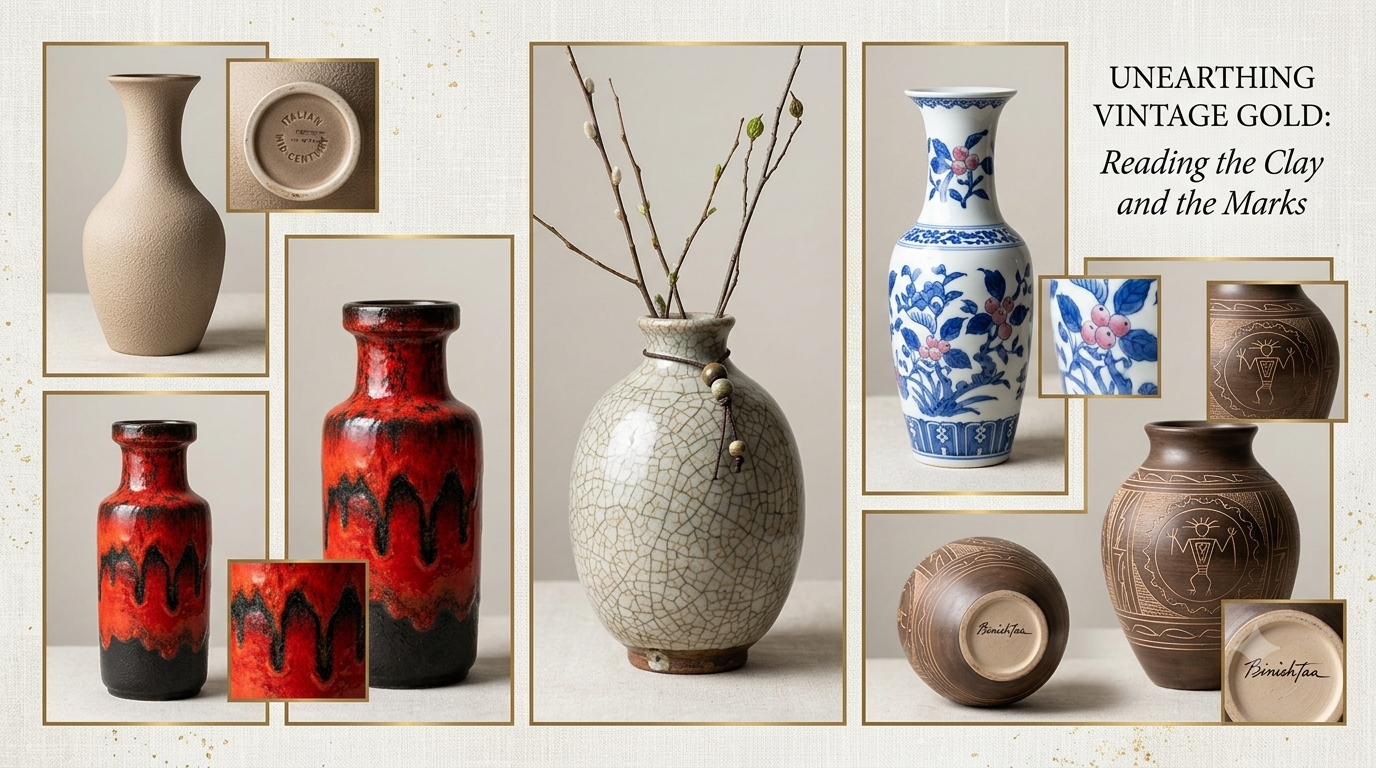
1. The Mid-Century Modern Italian Tactile Piece
- The Clues: A stunning 8.25-inch bulbous form featuring a highly tactile, abstract patterned matte finish in black and brown. Turning it over reveals an authentic, rustic “Italy” stamp on the base.
- The Identity: This is an Italian Mid-Century Art Pottery Studio Vase, hand-crafted in Italy during the 1960s. This piece beautifully bridges functional pottery and sculptural art, utilizing a two-tone glaze technique to create a rich, organic texture. It perfectly embodies the rustic Mediterranean modernist sensibility that flourished as Italian ceramics gained international recognition during the mid-to-late 20th century.
- Value: $75
🌋 2. The 1970s German Avant-Garde Drip
- The Clues: A 6.5-inch bulbous vase showcasing a dramatic, thick gradient pattern that morphs from high-gloss red to earthy green and deep matte black. It beautifully captures the distinctive styling of a historic German maker.
- The Identity: This striking piece is a Hutschenreuther Style Fat Lava Bulbous Vase, originating from West Germany’s iconic post-war experimental pottery boom in the 1960s–1970s. While historically renowned for delicate, traditional porcelain, manufacturers like Hutschenreuther dove into the avant-garde “Fat Lava” movement with thick, dramatic drip glazes that create incredible textural interest in mid-century modern spaces.
- Value: $45
🍂 3. The Wabi-Sabi Karatsu Masterpiece
- The Clues: A 9-inch hand-thrown vessel displaying an intentionally distressed beige crackle glaze layered with subtle golden hues, completed by a dark, iron-rich clay base and a small wooden bead accent cord.
- The Identity: This is a spectacular Vintage Karatsu-Style Japanese Studio Vase, heavily inspired by the 16th-century Chōsen (Korean) and Madara (Spotted) Karatsu traditions. It is a stunning representation of the wabi-sabi philosophy, where imperfections, dynamic crackling, and raw clay bodies are intentionally celebrated as high art. While the specific studio mark points to high-quality late-20th-century Japanese production, its aesthetic beautifully mirrors works by legendary contemporary ceramicists like Inoue Toya and Koji Inoue.
- Value: $64
🌸 4. The Chinoiserie Chic Export
- The Clues: A slender, 10-inch fine white porcelain vase with a flared neck and a glossy finish, featuring blue and white underglaze leaves and vines overlaid with delicate pink enamel dot berries.
- The Identity: A gorgeous Chinese-Style Blue & White Porcelain Vase dating to the mid-to-late 20th century. The unglazed base is a classic, telltale characteristic of mid-to-late century vintage decorative export pieces rather than formally marked, ancient family heirlooms. It’s a staple centerpiece for Grandmillennial, traditional, or Chinoiserie home decor.
- Value: $30
⛰️ 5. The Southwest Sgraffitto Storyteller
- The Clues: A contemporary, 6-inch matte black ceramic vase completely incised with detailed geometric patterns and figural petroglyph symbols, exposing the warm red-orange terracotta clay beneath.
- The Identity: This is an authentic piece of Native American folk art: a Navajo Etched Pottery Vase, beautifully hand-signed on the base by the Diné artist, BinishTaa. It utilizes the detailed Sgraffitto etching technique to engrave symbols representing rain, mountains, and traditional spiritual relationships with nature. Note for collectors: traditional pottery like this is left unglazed on the interior and is meant strictly for display!
- Value: $45
🕵️♀️ Zee’s Identification Guide: Reading the Marks and Clay
If you want to decode the true history of the art pottery you find on your sourcing trips, train your eyes to focus on these three research pillars:
- Deconstruct the Base and Stamps: Turn the piece upside down immediately. Look for country-of-origin stamps (like an incised “Italy” or “West Germany”) or hand-written artist signatures common in Western studio art and Native American pottery. Even an unglazed, unmarked foot ring can tell you if a piece was built as an export item.
- Read the Glaze and Technique: Thick, bubbly “Fat Lava” textures tell a geographical story of post-war European design, while delicate underglaze painting points to Asian ceramic traditions. Sgraffitto (etching through a glaze before firing) showcases an artist’s precision and cultural storytelling.
- Analyze the Silhouette and Clay: Look at the exposed clay body. Is it coarse grey stoneware, fine white porcelain, or rich red terracotta? Pair the material with shape silhouette guides—like mid-century bulbous forms or traditional trumpet necks—to narrow down the exact decade of production.
The Final Verdict: By spending just one hour reading the stamps, researching the artist signatures, and evaluating the glaze techniques of these five beautiful finds, we verified $259 in vintage design value!
The next time you spot a unique vase hiding on a thrift store shelf, turn it over and look at the base. You might just be holding a piece of design history.
Which of these five unique vases matches your home’s aesthetic the best? Let me know in the comments below!
Leave a Reply